
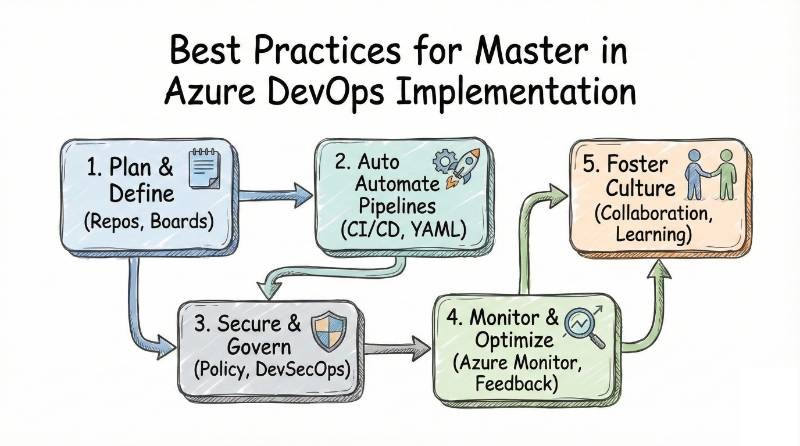
The transition from manual software releases to automated, cloud-native delivery is one of the most significant shifts I have seen in this industry. Having watched systems evolve from physical hardware to virtualized clouds, I can tell you that staying relevant means mastering the tools that drive speed and reliability. Today, Azure DevOps is the primary engine for enterprise-scale success.
This guide is for engineers and leaders who want to move beyond basic tasks and truly own the software lifecycle. The Master in Azure DevOps certification is the clear path to that expertise.
Understanding the Master in Azure DevOps Roadmap
The Master in Azure DevOps program, provided by DevOpsSchool, is an expert-level track. It is designed to take you from a basic understanding of the cloud to a point where you can manage complex, automated pipelines for any organization.
| Track | Level | Who it’s for | Prerequisites | Skills Covered | Recommended Order |
| Azure Fundamentals | Foundational | Beginners, Managers | None | Cloud concepts, Security, Governance | Step 1 |
| Azure Administrator | Associate | Systems/Cloud Engineers | AZ-900 | Networking, Identity, Storage | Step 2 |
| Azure DevOps Expert | Expert | DevOps/SREs | AZ-104 or AZ-204 | CI/CD, IaC, Instrumentation | Step 3 |
Deep Dive: Master in Azure DevOps (CDE)
What it is
The Master in Azure DevOps certification is an advanced program aimed at professionals who want to deepen their expertise in DevOps using Azure tools. This certification covers everything from pipeline management and continuous integration (CI) to deployment automation and infrastructure management. It prepares you to drive efficiency and collaboration across development, testing, and operations teams.
With tools such as Azure Pipelines, Azure Repos, and Azure Artifacts, Azure DevOps is one of the leading platforms for automating and optimizing the development lifecycle. Earning this certification enables professionals to build and maintain scalable, secure, and high-performing applications and systems.
Who should take it
The Master in Azure DevOps certification is designed for a variety of professionals looking to advance their careers in DevOps:
- DevOps Engineers: Those who want to specialize in Azure DevOps tools and automation processes.
- Cloud Engineers: Professionals interested in cloud-based DevOps solutions using Azure.
- Software Engineers: Developers seeking to enhance their skills in deploying, testing, and automating code within a DevOps pipeline.
- Engineering Managers: Leaders who aim to optimize team productivity and adopt DevOps practices across their organization.
- IT Professionals: Those looking to transition into DevOps roles or expand their knowledge of cloud-based DevOps strategies.
Skills you’ll gain
Completing the Master in Azure DevOps certification equips you with the following essential skills:
- Managing Azure DevOps Pipelines: Learn to design, manage, and optimize CI/CD pipelines for software delivery.
- Infrastructure Automation: Use tools like Terraform and Azure Resource Manager (ARM) templates to automate infrastructure provisioning.
- Version Control Management: Master version control and repository management with Azure Repos and Git.
- Automating Testing: Integrate automated testing within the pipeline to ensure high-quality software deployments.
- Monitoring and Logging: Leverage Azure Monitor and Log Analytics to track the performance of deployed applications.
Real-world projects you can lead
Upon completing the certification, you’ll be capable of working on projects such as:
- Building CI/CD Pipelines: Automate continuous integration and delivery workflows for applications in the cloud.
- Automating Infrastructure Deployment: Manage and deploy infrastructure as code using ARM templates and Terraform.
- End-to-End DevOps Pipeline Setup: Integrate code, tests, and deployment in a unified CI/CD pipeline.
- Integrating Automated Testing: Incorporate automated testing to ensure quality is maintained throughout the development lifecycle.
- Infrastructure and Cloud Resource Management: Manage cloud resources and infrastructure for scalable and secure applications.
Preparation Plan (The Expanded Path)
7-Day Preparation Plan:
- Day 1-2: Familiarize yourself with Azure DevOps fundamentals, including key tools like Azure Pipelines and Azure Repos.
- Day 3-4: Dive into version control and learn how to create, manage, and optimize pipelines for continuous integration and delivery.
- Day 5: Focus on automated testing and integrating it into your DevOps pipeline.
- Day 6: Study infrastructure automation using Terraform and Azure CLI.
- Day 7: Complete mock exams and practical tasks to reinforce your understanding.
30-Day Preparation Plan:
- Week 1-2: Learn the basics of Azure DevOps, focusing on pipelines, repositories, and version control.
- Week 3: Study automation tools like Terraform and Azure Resource Manager to manage infrastructure as code.
- Week 4: Implement end-to-end DevOps pipelines with continuous testing and automated deployment.
60-Day Preparation Plan:
- Week 1-2: Start with fundamental Azure DevOps and cloud computing knowledge.
- Week 3-4: Master pipeline creation, version control, and deployment automation.
- Week 5-6: Integrate automated testing and monitoring into your pipeline, and work on real-world projects to build hands-on experience.
Common Mistakes to Avoid
Here are some common mistakes to steer clear of while preparing for the Master in Azure DevOps certification:
- Skipping Hands-On Labs: Practice is key—ensure you gain practical experience with Azure DevOps tools.
- Neglecting Automated Testing: Testing automation is integral to DevOps pipelines; don’t skip it.
- Forgetting about Version Control: Version control tools like Git are essential for managing code and ensuring smooth collaboration.
- Underestimating Infrastructure as Code: Automation of infrastructure is crucial. Make sure to master ARM templates and Terraform.
- Lack of Monitoring: Effective monitoring is essential for ensuring the reliability and performance of your applications.
Best Next Certification After This
Once you’ve achieved Master in Azure DevOps, you can pursue the following certifications for further advancement:
- Certified Kubernetes Administrator (CKA): Deepen your expertise in container orchestration and management.
- Azure Solutions Architect Expert: Transition into a role where you design and implement complex cloud-based solutions.
- Certified Cloud Security Professional (CCSP): Specialize in securing cloud environments with a focus on DevOps practices.
Choose Your Path: 6 Specialized Domains
Once you hold the Master title, you can pivot into these high-growth tracks:
- DevOps: Focused on the core speed and quality of software delivery.
- DevSecOps: Where security is integrated into every automated step.
- SRE (Site Reliability Engineering): Focused on system uptime, scaling, and resilience.
- AIOps/MLOps: Using Azure ML to automate data models and intelligent systems.
- DataOps: Applying automation to big data and analytics pipelines.
- FinOps: Managing and optimizing cloud costs for better business outcomes.
Role → Recommended Certifications
| Role | Recommended Certifications |
|---|---|
| DevOps Engineer | Master in Azure DevOps, Certified Kubernetes Administrator |
| SRE | Site Reliability Engineering (SRE) Professional |
| Platform Engineer | Master in Azure DevOps, Cloud Solutions Architect |
| Cloud Engineer | Microsoft Certified: Azure Fundamentals, Master in Azure DevOps |
| Security Engineer | Certified Cloud Security Professional, DevSecOps Certification |
| Data Engineer | DataOps Certified Professional, Azure Data Engineer |
| FinOps Practitioner | FinOps Certified Professional |
| Engineering Manager | Master in Azure DevOps, Project Management Certification |
Top Training Institutions
To reach the master level, you need high-touch mentorship and lab-intensive environments:
DevOpsSchool
DevOpsSchool is a well-established name in the field of DevOps training, offering a robust Master in Azure DevOps program. Their course covers the essential tools and practices required to master Azure DevOps—from CI/CD pipelines to infrastructure automation and DevSecOps principles. DevOpsSchool’s training is designed to provide hands-on experience with real-world case studies, allowing learners to implement and automate workflows using Azure Pipelines, Azure Repos, and Azure Boards. The interactive sessions and expert guidance ensure that participants are ready to apply their skills immediately in professional environments.
Cotocus
For those looking for a structured and beginner-friendly learning path, Cotocus offers a comprehensive program that covers the fundamentals of Azure DevOps as well as advanced topics. Their Master in Azure DevOps certification training is a perfect blend of theory and hands-on practice. The curriculum includes automated build and release pipelines, version control using Azure Repos, deployment automation, and infrastructure as code. Cotocus also focuses on real-life case studies, ensuring learners are prepared to tackle practical challenges in their future roles.
Scmgalaxy
Scmgalaxy offers a hands-on approach to learning Azure DevOps, which is ideal for professionals looking to quickly build practical skills. Their Master in Azure DevOps course focuses on automation, CI/CD, and cloud infrastructure management. The program is structured around live labs, where students actively participate in building and managing DevOps pipelines using Azure tools. Scmgalaxy’s training is designed to ensure that learners develop expertise in automating every stage of the software development lifecycle, from code commit to production.
BestDevOps
BestDevOps provides a comprehensive training program that helps students master Azure DevOps in a clear, step-by-step manner. The Master in Azure DevOps certification course covers CI/CD pipelines, automated testing, infrastructure as code (IaC), and cloud-based DevOps practices. BestDevOps combines live instruction with practical labs and interactive sessions to ensure learners can apply the concepts they learn to real-world projects. Their courses are designed to help learners develop strong skills in deploying, testing, and securing software in the Azure cloud environment.
DevSecOpsSchool
For those interested in DevSecOps (security in DevOps), DevSecOpsSchool is a leading training provider. The Master in Azure DevOps certification offered by DevSecOpsSchool integrates security best practices into every stage of the DevOps lifecycle. Their training teaches learners how to incorporate security checks, automated vulnerability scanning, and compliance auditing into their CI/CD pipelines. This is an excellent choice for professionals who want to focus on securing cloud applications and ensuring their DevOps practices are compliant and secure.
SRE School
SRE School specializes in Site Reliability Engineering (SRE), making it a perfect fit for professionals interested in combining SRE principles with Azure DevOps tools. Their training covers the essentials of system reliability, performance monitoring, and scalability, along with the use of Azure DevOps to automate and manage these processes. This program is designed to help students maintain the reliability of large-scale systems while optimizing the development pipeline using Azure tools.
AIOpsSchool
AIOpsSchool offers specialized training that combines Artificial Intelligence (AI) with DevOps, giving professionals the tools to automate IT operations using machine learning. Their Master in Azure DevOps course focuses on integrating AI into the CI/CD pipeline, allowing learners to automate anomaly detection, performance monitoring, and incident management. This course is ideal for professionals looking to integrate AIOps into their DevOps practices, enabling smarter, data-driven automation.
DataOpsSchool
DataOpsSchool focuses on DataOps, which applies DevOps principles to the management of data workflows. The Master in Azure DevOps certification from DataOpsSchool teaches professionals how to automate data pipelines, version control for data, and integrate DevOps tools into the data engineering process. This training is ideal for data engineers who want to streamline their data management processes using Azure DevOps tools.
FinOpsSchool
FinOpsSchool offers a unique approach to Financial Operations (FinOps) within the DevOps space. Their Master in Azure DevOps program helps professionals optimize cloud costs and manage cloud resource allocation using Azure DevOps practices. The curriculum focuses on balancing the cost-efficiency of cloud resources with the performance demands of DevOps workflows, ensuring that learners can effectively manage budgets while maintaining high-performance environments.
FAQs: Program Specifics (Master in Azure DevOps)
1. How does this “Master” program differ from the standard AZ-400 exam? The AZ-400 is a single certification exam from Microsoft. The Master program is a complete training ecosystem. While the exam tests your knowledge, this program builds your skills by including essential industry tools like Terraform, Docker, and Kubernetes that are not fully covered in the standard exam syllabus.
2. Who is the primary provider for the Master in Azure DevOps (CDE)? The program is a flagship offering from DevOpsSchool. They collaborate with global trainers to ensure the curriculum reflects what top-tier companies are actually looking for in a lead engineer.
3. Where can I find the official curriculum and details? You can access all the official information, including the deep-dive syllabus, at this link: Master in Azure DevOps.
4. Is this certification relevant for Engineering Managers? Absolutely. Managers who understand the technical mechanics of automated delivery lead more efficient teams. It helps you set better timelines and understand the technical debt your team might be facing.
5. Are the training sessions live or pre-recorded? Leading institutions like DevOpsSchool focus on live, instructor-led sessions. This is crucial because it allows you to get immediate help with complex labs and ask questions as they come up.
6. Does the curriculum include Infrastructure as Code (IaC)? Yes. IaC is a major part of the program. You will learn how to use Terraform and Bicep to build and manage cloud environments through code, which is a requirement for any senior DevOps role.
7. Is there support for job placement or resumes? Yes. Most master-level tracks include career coaching. This involves reviewing your resume to highlight your new skills and conducting mock interviews to prepare you for the current market.
8. Can I enroll if I have no previous Azure experience? Yes. The program is structured to be “zero-to-hero.” It begins with the Foundational track to ensure everyone has a solid grasp of the cloud before moving into advanced automation.
FAQs: Difficulty, Path, and Career Value
9. Difficulty: How hard are the practical labs? The labs are designed to be challenging. They mimic real-world production failures. You aren’t just following a tutorial; you are learning how to troubleshoot systems under pressure.
10. Difficulty: What happens if I don’t pass the exam on my first try? In my experience, failure is just a data point. Most programs offer retake support and additional coaching to help you identify the gaps in your knowledge so you can pass on the next attempt.
11. Time: Can I finish this while working a full-time job? Yes. The schedule is typically designed for working professionals. Most successful students spend about 5 to 10 hours a week on study and lab work.
12. Time: What is the total duration to reach mastery? For a dedicated student, it takes about 100 to 120 hours of total effort. This usually translates to a 2 to 3-month journey from start to finish.
13. Prerequisites: Do I need a specific degree to start? No. While a technical background is helpful, your ability to understand logic and solve problems is more important than a specific degree.
14. Prerequisites: Is deep coding knowledge required? You don’t need to be a software developer. However, you must be comfortable with logic and scripting (like Bash or PowerShell). You will also learn YAML for pipeline configuration.
15. Sequence: Why should I take Fundamentals before the Expert exam? DevOps is built on top of cloud administration. If you don’t understand how a Virtual Network works, you won’t be able to automate it properly. The sequence prevents “knowledge gaps.”
16. Sequence: Should I learn Kubernetes before or after this? I recommend learning the basics of Docker during this program. Deep Kubernetes mastery (CKA) is usually the best step to take after you have mastered the core Azure DevOps flow.
17. Value: Why choose Azure DevOps over other platforms? Azure is the top choice for large enterprises. Since it integrates perfectly with Microsoft’s existing business tools, “Master” level experts in this ecosystem are in extremely high demand.
18. Value: What is the typical return on investment (ROI)? Most certified professionals see a significant salary hike. In the current market, a Master in Azure DevOps can increase your earning potential by 30% to 50% almost immediately.
19. Career Outcomes: Does this help in getting remote work? Yes. DevOps is one of the most remote-friendly roles in tech. Since you are managing cloud systems, you can do your job from anywhere in the world.
20. Career Outcomes: How does this help senior professionals with 15+ years of experience? For seniors, this is about moving into Architect or Manager roles. It proves you aren’t stuck in “old ways” of working and that you understand the modern, high-speed delivery models.
Next Certifications to Take
Stay ahead of the curve by looking toward these three horizons
1. Same Track Certifications:
If you want to deepen your expertise in the Azure ecosystem and DevOps practices, consider these certifications:
- Azure Solutions Architect Expert: Ideal for those looking to design and implement complex Azure solutions. It focuses on cloud infrastructure, security, and governance.
- Certified Kubernetes Administrator (CKA): Kubernetes is integral to managing containerized applications. This certification enhances your ability to handle container orchestration and cloud-native applications.
- Certified DevOps Engineer Expert: For a more specialized focus on DevOps practices, this certification validates your ability to implement DevOps principles across the entire software development lifecycle.
2. Cross-Track Certifications:
For those interested in expanding into adjacent fields, cross-track certifications can offer broader skill sets:
- Certified Cloud Security Professional (CCSP): As security is critical in any DevOps pipeline, this certification covers cloud security architecture and operations, ensuring secure cloud implementations.
- Site Reliability Engineering (SRE) Professional: If you’re looking to focus on maintaining high uptime and reliability of systems, this certification specializes in site reliability and performance engineering.
- Certified DataOps Professional: DataOps is increasingly important in ensuring the speed and quality of data pipelines. This certification focuses on the integration of data management within the DevOps lifecycle.
3. Leadership Certifications:
If you’re aiming for managerial or leadership roles in the DevOps field, consider certifications that emphasize leadership and strategic thinking:
- Certified Agile Leadership (CAL): This certification equips you with the skills to lead agile transformations within organizations, focusing on agile methodologies and team management.
- Project Management Professional (PMP): A widely recognized certification for project managers, PMP focuses on effective project management skills, including scope, time, and cost management.
- Certified ScrumMaster (CSM): As many organizations adopt agile methods, becoming a certified ScrumMaster can help you guide teams through the Scrum framework, focusing on collaboration, transparency, and delivery.
Testimonials
“The Master program at DevOpsSchool turned my theoretical knowledge into a practical career. The lab environments are exactly like real production.” — Karan M., Cloud Architect.
“As a manager, I needed to bridge the gap between our developers and our operations team. This program gave me the roadmap.” — Sonia L., Engineering Lead.
Conclusion
Mastering Azure DevOps is about more than just earning a certificate; it’s about gaining the vision to lead technical transformations. In my years in this field, I have seen that those who invest the time to truly understand the flow of software delivery are the ones who define the future of their organizations.
The road from a beginner to an expert is demanding, but the rewards—in terms of stability and impact—are unmatched. Start your journey today, commit to the process, and become the master of your technical destiny.
