
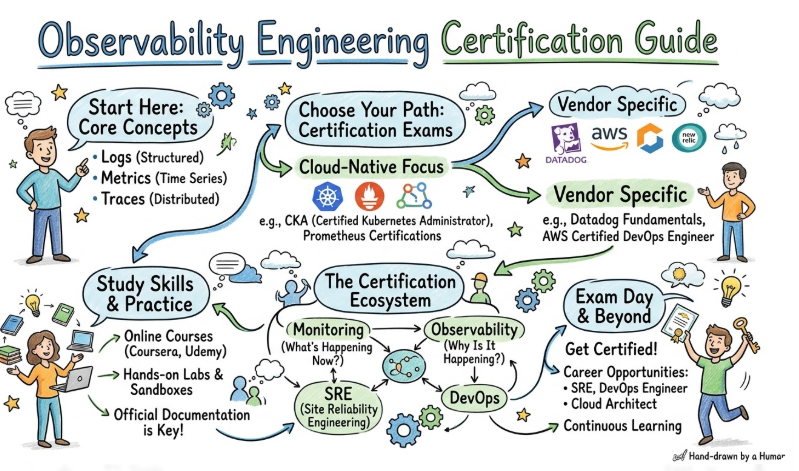
The digital world has moved past the era of simple server management. Today, we handle massive networks of microservices that are constantly changing. When a system slows down or fails, it is no longer enough to look at a simple dashboard and guess the cause. This is where Observability Engineering becomes a critical asset. It is the science of making the invisible visible, allowing you to understand the internal health of a system by looking at the data it provides from the outside.
For engineers and managers in India and across the world, this is a major shift in how we handle technology. It is about moving from “hope-based” operations to “data-driven” resilience. This guide is designed to help you navigate the Master in Observability Engineering certification, ensuring you have a clear roadmap to becoming a top-tier specialist in this high-demand field.
Why Observability is the Backbone of Modern Tech
In my time helping teams navigate complex infrastructure, I have seen that the most expensive problem is a lack of clarity. Traditional monitoring tells you when a heart stops beating. Observability tells you exactly why the blood flow slowed down ten minutes before the failure. It allows you to ask questions of your system that you never thought of before.
For software engineers and leadership, this clarity is the difference between a minor update and a major disaster. By mastering observability, you aren’t just watching tools; you are architecting a system that can explain itself. This is the ultimate goal of the modern professional.
Master in Observability Engineering Certification Overview
This program is a professional-grade certification designed to turn practitioners into experts who can design and manage high-scale telemetry systems.
| Track | Level | Who it’s for | Prerequisites | Skills Covered | Recommended Order |
| Observability | Master | SRE, DevOps, Platform Eng | Linux, Cloud, Docker | Logs, Metrics, Traces, OTel | Foundation -> Master |
Deep Dive: Master in Observability Engineering (MOE)
What it is
The Master in Observability Engineering is an elite certification program provided by DevOpsSchool. It focuses on the three pillars of telemetry: Logs, Metrics, and Distributed Tracing. The program is designed to teach you how to build a unified visibility strategy that allows for deep analysis of application performance and system reliability at a global scale.
Who should take it
This course is built for individuals who are responsible for the uptime and performance of digital services.
- Software Engineers: To learn how to build apps that are transparent by design.
- SREs & DevOps Engineers: To master the art of reducing Mean Time to Recovery (MTTR).
- Platform Engineers: To provide visibility tools as a service to their development teams.
- Engineering Managers: To use data to justify technical decisions and resource needs.
Skills you’ll gain
You will gain the expertise to transform raw data into clear, actionable business intelligence.
- Advanced Instrumentation: Learn how to use OpenTelemetry to extract data from any programming language without manual effort.
- Distributed Tracing Mastery: Gain the ability to follow a single user request through a complex web of microservices.
- SLO & SLI Design: Master the creation of Service Level Objectives that truly reflect the user experience.
- Telemetry Data Management: Learn to handle massive volumes of logs and metrics without letting cloud costs get out of control.
Real-world projects you should be able to do
After completing this path, you will have a portfolio of work that proves your practical ability.
- The Unified Visibility Hub: Build a centralized dashboard that combines logs from old apps and traces from new microservices.
- The Smart Alerting Engine: Design an alerting system that ignores noise and only notifies the team when the user experience is actually at risk.
- The Performance Bottleneck Finder: Use distributed tracing to find the exact line of code causing a delay in a global application.
Preparation Plan
- 7–14 Days (The Foundation): Focus on core concepts. Learn the difference between structured logs and metrics. Get comfortable with the basic theory of OpenTelemetry.
- 30 Days (The Core Learning): Complete the MOE curriculum modules. Start instrumenting a sample application and observe how the data flows into tools like Prometheus and Grafana.
- 60 Days (The Professional Level): Focus on the master projects. Learn how to scale your telemetry strategy to handle millions of events and manage long-term data storage.
Common Mistakes
Many professionals make these errors when starting their observability journey. This program helps you avoid them:
- Focusing Only on Dashboards: A dashboard is a tool, not a strategy. You must focus on the data quality behind the dashboard.
- Over-Monitoring: Collecting too much data makes it impossible to find the real problems. You must learn to focus on high-signal data.
- Ignoring the Cost: Telemetry data can be expensive. A master engineer knows how to sample data to keep costs low while maintaining visibility.
Best next certification after this
After completing the Master in Observability, the logical next step is to move into Advanced AIOps or Chaos Engineering. These fields allow you to use your new visibility skills to automate troubleshooting and proactively test system resilience.
Choose Your Path: 6 Specialized Learning Journeys
Observability is a versatile skill that enhances every modern operational role:
- DevOps Path: Focus on “Continuous Feedback.” Use observability to verify that every deployment is healthy and performing as expected.
- DevSecOps Path: Treat security as a visibility problem. Use logs and traces to find unauthorized access or strange data patterns in real-time.
- SRE Path: This is the primary path. Use data to manage error budgets and ensure your systems meet their reliability targets.
- AIOps/MLOps Path: Feed high-quality telemetry into AI models to find hidden patterns and predict failures before they happen.
- DataOps Path: Focus on the health of data pipelines. Ensure that the data flowing through your company is accurate and on time.
- FinOps Path: Connect technical performance to cloud costs. Identify wasteful resources and optimize your monthly infrastructure bill.
Role → Recommended Certifications Mapping
To reach the top of your career, follow this suggested sequence of certifications:
- DevOps Engineer: Master in DevOps → Master in Observability.
- SRE: SRE Certified Professional → Master in Observability.
- Platform Engineer: Certified Kubernetes Administrator → Master in Observability.
- Cloud Engineer: Cloud Architect → Master in Observability.
- Security Engineer: DevSecOps Professional → Master in Observability.
- Data Engineer: DataOps Professional → Master in Observability.
- FinOps Practitioner: FinOps Certified → Master in Observability.
- Engineering Manager: Certified DevOps Manager → Master in Observability.
Next Certifications to Take
Based on the latest industry trends from Gurukul Galaxy, you should consider these three directions:
- Same Track: Advanced AIOps – Moving from seeing the problem to letting an AI help find and fix it.
- Cross-Track: DevSecOps Certified Professional – Applying your visibility skills to defend your organization from cyber threats.
- Leadership: Certified DevOps Architect (CDA) – Using your technical mastery to design the high-level strategy for a company’s technology.
Top Institutions for Training & Certification
This is the leading institution for those seeking a master-level technical education. They provide deep, hands-on training led by industry experts who have spent years in the field. Their curriculum is updated constantly to reflect the latest changes in the global technology market.
Cotocus
Cotocus is known for its immersive training environments and high-quality lab setups. They ensure that every student has the opportunity to practice complex observability tasks in a production-like setting, making the learning process highly practical.
Scmgalaxy
Scmgalaxy is a community-driven institution that offers a wealth of technical resources and community support. They are an excellent place for engineers who want to stay connected with the latest tools and practices in the DevOps and automation ecosystem.
BestDevOps
This school focuses on results-oriented training that gets you ready for the job market quickly. They focus on the most important tools and practices that help you excel in professional interviews and real-world projects.
DevSecOpsSchool
If you want to merge security with operations, this is the place to be. They teach you how to use visibility and monitoring to create a proactive defense system for your applications, helping you find threats before they become disasters.
SRESchool
Specifically focused on Site Reliability, this institution teaches the cultural and technical aspects of keeping systems up. They are experts in teaching SLOs, error budgets, and incident response to ensure high availability.
AIOpsSchool
This school is at the cutting edge, showing you how to use artificial intelligence to manage your systems. They show you how to take the data you collect through observability and use it to drive automated decisions and anomaly detection.
DataOpsSchool
This institution focuses on the health and visibility of data pipelines. It is perfect for those who want to ensure that their organization’s data is always accurate, moving efficiently, and visible from start to finish.
FinOpsSchool
FinOpsSchool is essential for those looking to manage cloud costs. They teach you how to use technical metrics to drive financial efficiency, helping you save your company money on cloud bills by identifying wasteful infrastructure.
FAQs: Master in Observability Engineering
- Is this only for senior engineers? While it is a “Master” program, anyone with a solid understanding of cloud and Linux can benefit if they are willing to put in the effort.
- How much time does it take to finish? Most working professionals find they can complete the requirements in about 60 days with consistent study.
- Are there any prerequisites? A basic understanding of Linux, networking, and cloud services is highly recommended before you start.
- Is there a specific order for the courses? It is usually best to have a foundation in DevOps or SRE principles before moving to the specialized Master in Observability program.
- What is the value of this certification? It proves you have the skills to manage complex, global-scale systems, which is one of the highest-paying niches in tech right now.
- Will this help me in an interview? Yes. Being able to explain “why” a system failed using data rather than guesses is a key skill that hiring managers look for.
- Is there a lot of math involved? Basic statistics are helpful for understanding trends and averages (like P99 latency), but you do not need to be a mathematician.
- Does it cover remote work needs? Yes. Observability is vital for remote teams because it provides a common data set that everyone can see and discuss regardless of their location.
- What tools will I learn? You will cover industry standards like Prometheus, Grafana, the ELK stack, and OpenTelemetry.
- Do I get a certificate? Yes, you receive a professional certificate from DevOpsSchool upon completion of the training and master projects.
- Can I take the exam online? Yes, the entire training and certification process is available online for your convenience.
- Is it helpful for managers? Absolutely. Managers who understand observability can set better goals for their teams and justify their technical choices to the business leadership.
FAQs: Master in Observability Engineering
- Does the program include AIOps? Yes, it explores how to use the data you collect to drive AI-based anomaly detection and automated responses.
- Are the labs real-world? Yes, the labs are designed to mimic the actual outages and performance issues you will face in a professional production environment.
- Who is the primary trainer? The curriculum is guided by industry veterans like Rajesh Kumar, who has decades of experience in high-scale infrastructure and operations.
- Does it cover cloud-native tools? Yes, it covers how to use observability in major cloud environments like AWS, Azure, and Google Cloud.
- What is the passing score? You typically need at least 70% on the final assessment to earn your master-level certificate.
- Can I retake the course materials? Most providers offer a Learning Management System (LMS) with 24/7 access so you can always go back and refresh your skills.
- Is there a focus on cost-saving? Yes, a large part of the “Master” curriculum is learning how to be efficient with your telemetry data and cloud infrastructure costs.
- What is the main benefit for a business? Reduced downtime, faster release cycles, and a clear, data-driven understanding of the entire user journey.
Conclusion
The journey toward becoming a Master in Observability Engineering is a commitment to technical excellence and operational maturity. In a world where systems are becoming more complex every day, the ability to find clarity in the noise is the most valuable asset any engineer or manager can possess. This certification is more than just a piece of paper; it is a testament to your ability to lead organizations through their most difficult technical challenges. By choosing to master these skills, you are choosing to be the person who brings stability to chaos and confidence to development. The roadmap provided here, especially through the expert programs at DevOpsSchool, is your path to the top of your field. Take the next 60 days to invest in this mastery, and you will find yourself with a skill set that is not just in high demand, but essential for the future of technology.
