
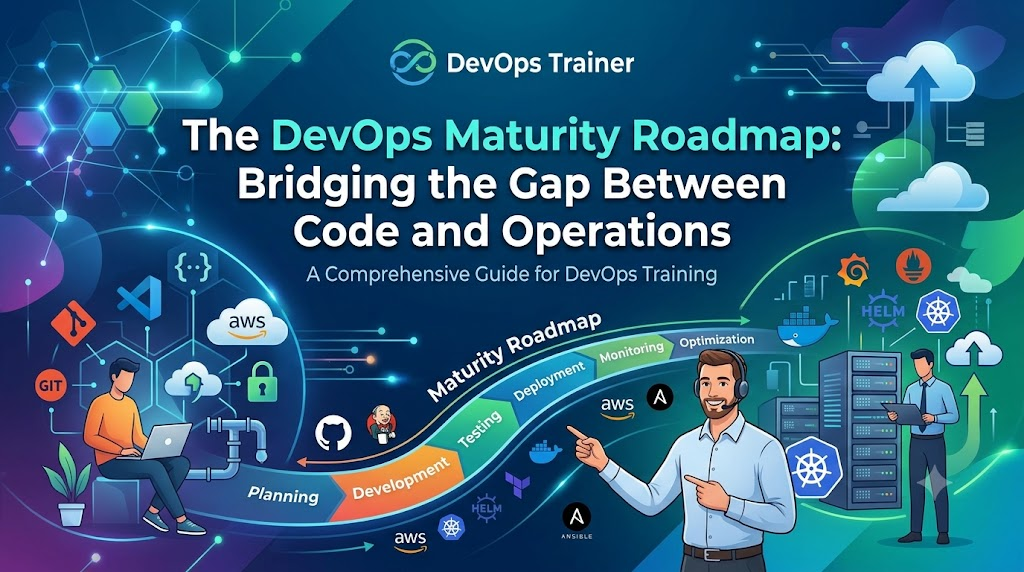
In the rapidly evolving landscape of modern software development, the gap between tooling and operational excellence has never been wider. Organizations often invest heavily in cloud infrastructure, container orchestration, and sophisticated CI/CD toolchains, yet struggle to achieve the promised velocity and reliability. This disconnect is rarely a failure of technology; it is typically a challenge of capability and culture. As an experienced DevOps architect and consultant, I have observed that sustainable transformation requires more than just installing new platforms—it requires an architectural mindset shift. To explore practical insights on bridging this gap, you can visit Rajesh kumar to understand how structured guidance can align team capabilities with enterprise goals.
Understanding Current Enterprise Challenges
The journey toward a mature DevOps model is fraught with obstacles. Many organizations start by automating individual tasks, resulting in “islands of automation” that do not necessarily contribute to a cohesive delivery pipeline. One of the most prevalent issues is the adoption of complex technologies—such as Kubernetes—without first establishing a foundation of operational discipline.
Scalability issues often arise when teams treat infrastructure as static, ignoring the principles of immutability and declarative configuration. Furthermore, reliability becomes a persistent struggle when monitoring is treated as an afterthought rather than a core requirement of the design phase. Security often remains a siloed function, tacked onto the end of the development lifecycle, which creates bottlenecks and friction. Solving these challenges requires a shift from “doing DevOps” to “becoming a DevOps organization.”
Why Skilled DevOps Trainers Matter
Transitioning to modern engineering practices is a complex human endeavor. While documentation and online tutorials are abundant, they often lack the context of an enterprise environment. An experienced DevOps trainer brings more than just syntax; they bring a perspective on how different components interact at scale.
A high-quality DevOps corporate training program serves as a catalyst for cultural change. It provides the team with a safe space to fail during practice, minimizing risks when implementing changes in production. In my experience as a DevOps Trainer in India, I have found that the difference between a stalled transformation and a successful one is often the ability of the team to understand the “why” behind every configuration, not just the “how.”
Essential Skills Every Modern DevOps Professional Needs
Modern engineering demands a versatile skill set. A DevOps professional today must be a bridge between development, operations, and security.
- CI/CD Pipeline Training: Moving beyond simple script execution to designing robust, maintainable, and secure deployment pipelines.
- Infrastructure as Code (IaC): Mastering tools through dedicated Terraform Training to ensure infrastructure is versioned, peer-reviewed, and reproducible.
- Containers: Understanding the lifecycle of containerized applications, from development to deployment.
- Cloud Platforms: Deep expertise in cloud-native services is essential, particularly for those serving as an AWS DevOps Consultant.
- Monitoring and Observability: Implementing systems that provide actionable insights rather than just raw data.
- Automation: Reducing manual toil through scripting and systematic process engineering.
Kubernetes Training for Enterprise Teams
Kubernetes is arguably the most powerful orchestration engine available, but it is also one of the most complex. Through targeted Docker Kubernetes Training, organizations can move beyond basic deployment manifests and into the realm of Day 2 operations. This includes mastering ingress controllers, network policies, service meshes, and autoscaling. Enterprise teams must focus on the operational aspects of the platform—how to manage upgrades, handle stateful workloads, and secure the cluster from the inside out.
Site Reliability Engineering (SRE) Training
SRE is not just about having a team that handles pager duty; it is an engineering discipline applied to operations. Effective SRE training focuses on teaching teams how to define Service Level Objectives (SLOs), manage error budgets, and perform blameless post-mortems. As an SRE Trainer, I emphasize that reliability is a feature, not an afterthought. When teams learn to prioritize availability based on data rather than instinct, the entire organization benefits from a more stable and predictable release cycle.
DevSecOps in Modern Organizations
Security in the cloud era cannot be a perimeter defense strategy. It must be woven into the fabric of the pipeline. A DevSecOps Trainer helps teams implement practices such as static analysis, dependency scanning, and secret management within the CI/CD workflow. The goal is to empower developers to identify security vulnerabilities early in the development lifecycle, rather than relying on a separate security team to catch them just before release.
Platform Engineering and Developer Enablement
The current trend in high-performing organizations is the move toward Platform Engineering. Instead of forcing developers to manage their own complex infrastructure, a Platform Engineering Consultant helps design Internal Developer Platforms (IDPs). These platforms offer self-service capabilities that allow developers to provision environments, deploy code, and monitor their services without needing deep infrastructure expertise. This shift increases developer velocity and allows operations teams to focus on building the platform rather than ticketing individual requests.
How DevOps Consulting Accelerates Transformation
External consulting acts as a mirror for internal engineering teams. An objective assessment of the current state, followed by a collaborative roadmap, can prevent costly strategic errors. As an AWS DevOps Consultant, my focus is not on implementing specific tools, but on creating an environment that supports long-term growth. This includes helping leadership understand the trade-offs between different architectures, such as serverless versus container-based solutions, and guiding the team through the implementation of complex GitOps Training workflows to ensure consistency across environments.
Suggested Learning Paths for Different Roles
- Developers: Focus on containerization, basic CI/CD, and application-level security.
- Operations Engineers: Focus on Kubernetes administration, networking, and advanced IaC patterns.
- Architects: Focus on system design, service-oriented architecture, cloud cost optimization, and reliability patterns.
- Security Professionals: Focus on policy-as-code and integrating security tools into CI/CD pipelines.
- Engineering Managers: Focus on understanding DevOps metrics (DORA metrics), team structure, and fostering a culture of continuous improvement.
Practical Recommendations for Organizations
Start small, but plan for scale. Organizations often try to change everything at once, which leads to burnout and fatigue. Begin by identifying one high-value project to pilot new methodologies. Invest in professional training to ensure the team has a solid foundation. Finally, establish a feedback loop where the implementation is constantly reviewed and adjusted based on real-world performance metrics.
Frequently Asked Questions
1. How do you quantify the effectiveness of DevOps training? Effectiveness is best measured through improved DORA metrics: deployment frequency, lead time for changes, mean time to recovery (MTTR), and change failure rate. If these indicators trend positively after training, the initiative is working.
2. Does managed cloud infrastructure eliminate the need for deep Kubernetes expertise? No. While managed services handle the control plane, teams are still responsible for application configuration, security policies, and resource management. Deep knowledge is essential for troubleshooting and cost optimization.
3. How should organizations approach the transition from traditional SysOps to Platform Engineering? Begin by treating the infrastructure as a product and developers as your customers. Identify the manual tasks that slow developers down and build internal tools to automate those specific points of friction.
4. What are the common pitfalls when implementing GitOps at scale? Common mistakes include failing to implement strict RBAC for the Git repository, neglecting the state reconciliation frequency, and attempting to manage non-idempotent configurations through declarative pipelines.
5. Why is a top-down approach often insufficient for SRE adoption? SRE requires a cultural shift toward shared ownership. If SRE is imposed from the top without developer buy-in, it often results in friction where developers feel that operations are merely setting arbitrary limits on their development speed.
6. How can teams effectively integrate security without slowing down CI/CD cycles? The key is automation. Security checks should be integrated into the pipeline as automated gates. If a scan passes, the code moves forward; if it fails, the feedback is immediate, allowing for rapid remediation.
7. Is there a specific sequence to learning Infrastructure as Code tools? Start by understanding the concept of state and idempotency before learning specific syntax. Once these concepts are clear, learning the specific tool—such as Terraform or Pulumi—becomes a matter of mastering the API.
8. How should technical debt be managed during an accelerated DevOps transformation? Technical debt should be treated as a backlog item with a budget. Dedicate a specific percentage of every sprint to paying down debt, ensuring it does not accumulate to the point of impeding future progress.
Conclusion
Building a high-performing engineering organization is a continuous journey. It requires a commitment to hands-on practice, a willingness to challenge established norms, and an investment in the growth of the engineering team. Through expert guidance and a focus on practical, real-world application, organizations can move beyond the hype of modern tools and build truly resilient systems. Continuous learning is not merely an optional activity; it is the fundamental requirement for staying competitive in the current software ecosystem.

