
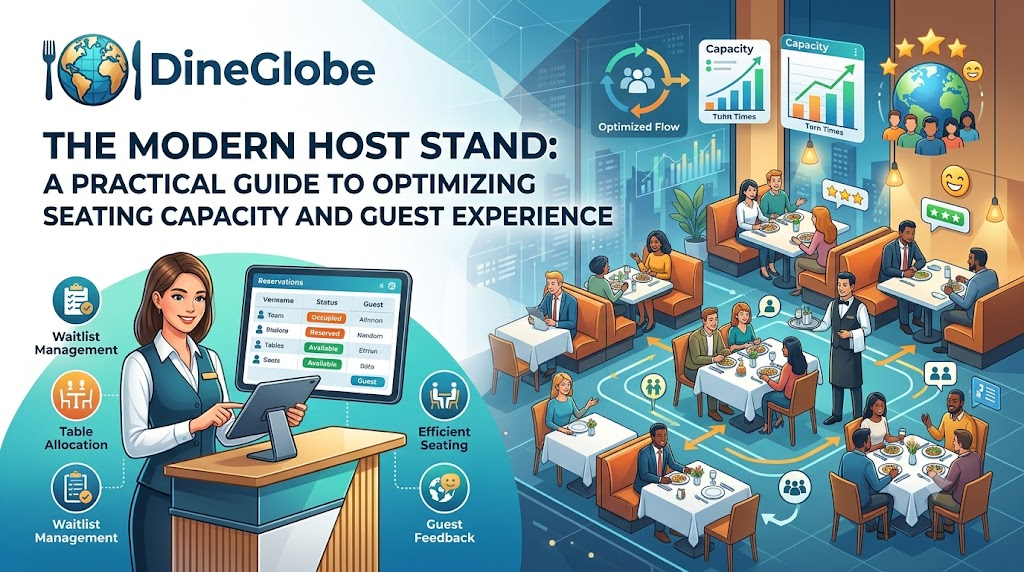
The greeting stand serves as the nerve center of the entire restaurant. When the entrance is backed up with anxious walk-ins, phone lines won’t stop ringing, and host staff are constantly leaving the podium to see if a corner booth has cleared, the entire service rhythm stumbles. Optimizing your front-of-house restaurant operations is about turning this reactive scramble into a steady, predictable science. Modern hospitality systems like DineGlobe demonstrate that running an efficient door doesn’t require rigid, robotic service; it simply requires giving hosts live visibility into table availability, waitlist flow, and arrival pacing so the team can focus on real hospitality.
Whether you run an intimate 45-seat neighborhood trattoria or a high-volume urban brasserie, smoothing out your floor logistics unlocks untapped capacity and protects your operational margins.
3 Operational Roadblocks That Choke Floor Efficiency
Most floor managers assume that dining room bottlenecks happen because the kitchen is backed up or service staff are moving too slowly. In reality, the breakdown almost always originates at the front desk.
1. The Host-to-Floor Communication Lag
When hosts must physically walk the dining room to verify whether a table is paid, bussed, or reset, they create immediate delays at the entrance. In a busy venue, these two-to-three-minute investigative walks occur dozens of times a shift, leaving the host stand unstaffed, phone calls missed, and incoming parties standing unattended.
2. Rigid Seating and Mismatched Party Sizes
A common drain on table turnover rate is the inflexible allocation of tables:
- A three-person walk-in is placed at a spacious six-top booth because the host lacks an organized plan for upcoming bookings.
- Two-tops are scattered randomly, making it impossible to push tables together when an unexpected six-top arrives.
Without structured, flexible layout planning, a dining room can appear packed to the eye while operating at barely 70% actual seat capacity.
3. Unmetered Seating Waves
When a host panics over a crowded lobby and seats five parties across different sections all at once, they trigger a chain-reaction slowdown:
- Bartenders receive an avalanche of ticket orders simultaneously.
- Servers struggle to take drink orders and deliver menus within standard service windows.
- The kitchen line gets flooded with twenty entrées fired at the exact same minute.
The result is longer overall table turn times, frustrated staff, and disappointed diners.
Strategic Levers to Elevate Front-of-House Performance
Running an agile, high-yield dining room requires aligning physical floor design, digital waitlist management, and structured booking pacing.
Front Desk Workflow Pipeline:
Direct Web Booking ➔ Visual Table Assignment ➔ Automated Arrival Check-in ➔ Staggered Seating ➔ Instant Busser Notification
1. Build an Adaptable Floor Plan
Your dining room layout should work for you, not against you. High-performing dining rooms design their layouts around modular flexibility:
- Favor deuces over large fixed tables: Two-top tables are the Swiss Army knife of dining rooms. They accommodate solo business diners, couples, and—when slid together—can morph into four-tops, six-tops, or ten-tops within 30 seconds.
- Maintain clear service arteries: Never cram extra tables into high-traffic paths leading to the kitchen pass or bar. Clear thoroughfares ensure food arrives hot and bussers clear dirty plates swiftly.
- Carve out a dedicated reception buffer: Prevent waiting guests from hovering over seated tables. Directing waiting parties toward an open bar nook keeps the entryway orderly and captures high-margin pre-dinner beverage sales.
2. Replace Paper Waitlists with Proactive SMS Messaging
Paper waitlists breed confusion and guest fatigue. When guests are told “it will be roughly 45 minutes” with no transparency, walkout rates surge. Digital waitlists update guests directly on their mobile devices, giving them freedom to grab a drink nearby while keeping the lobby clear. Furthermore, pairing waitlist data with real-time meal stages ensures wait-time quotes are based on reality rather than guesswork.
3. Cultivate Direct Guest Channels Over Third-Party Portals
While third-party reservation directories offer initial exposure, their ongoing per-cover fees bite deeply into restaurant profits. Building a system that prioritizes direct bookings allows you to maintain full ownership of guest records, retain custom seating preferences, and keep 100% of the revenue from every booking seated.
Unifying Your Floor with DineGlobe
Overcoming these operational snags does not require complicated, clunky hardware. It simply requires a centralized hub built for the fast-paced reality of the host desk.
This is where DineGlobe’s front-of-house management platform offers an intuitive, comprehensive solution for busy venues. By combining table availability, visual floor layouts, direct booking options, and arrival tracking in one place, the software equips operators with:
- Integrated Direct Booking: Capture guest reservations straight from your own digital channels without paying third-party marketplace fees on every cover.
- Dynamic Floor Plan Mapping: Monitor your entire dining room on a single visual screen, tracking open, seated, check-presented, and ready-to-bus tables in real time.
- Live Waitlist Coordination: Manage walk-in queues effortlessly, send automated SMS alerts to diners, and turn walk-in traffic into seated revenue.
- Paced Arrival Flow: Regulate the tempo of arriving covers to prevent overwhelming your kitchen line and service staff during peak dining rushes.
By handing your front team live operational clarity, you eliminate the guesswork and let your staff deliver warm, attentive service.
Actionable Tactics to Reclaim 10 Minutes per Table Turn
Maximizing your table turnover rate is not about pushing diners out the door; it is about eliminating operational lag between service milestones.
| Meal Stage | Frequent Bottleneck | High-Impact Solution |
| Arrival & Seating | Host searches floor for an open table | Live floor plan highlights vacant, bussed tables instantly |
| First Contact | Server caught at another table | Host or bar runner drops water and presents bread within 60 seconds |
| Bill Payment | Guests wait for server to retrieve payment slip | Digital payment terminals or checks presented promptly upon finished dessert |
| Reset & Turn | Table stays unbussed while host needs the seat | Bussers receive visual alerts to turn tables within 2 minutes of departure |
Eliminating just two minutes from each stage shaves eight to ten minutes per table. Over a busy evening shift, that recaptured time easily translates into an extra round of seatings without rushing a single guest.
Frequently Asked Questions
What does front-of-house restaurant operations cover?
Front-of-house (FOH) operations include every guest-facing interaction across the venue: handling reservations, managing the host podium, greeting and seating diners, running waitlists, coordinating table service, and managing guest payments.
How does real-time floor plan software improve table efficiency?
A visual floor management system lets hosts and managers view live dining statuses at a glance. By seeing which tables are in appetizer, entrée, or payment phases, the front desk can seat parties the moment a table is cleared, eliminating empty table downtime during peak service hours.
Why should restaurants encourage direct bookings instead of third-party directories?
Third-party reservation marketplaces charge recurring per-cover fees and often restrict access to customer contact details. Direct booking channels allow restaurants to keep their profit margins intact, maintain their own guest relationships, and set customized cancellation and seating rules.
How do digital waitlists help reduce guest walkouts?
Digital waitlists eliminate the stress of crowded lobbies by providing accurate wait estimates and sending text message updates when tables are ready. Diners can comfortably explore the neighborhood or relax at the bar, resulting in significantly lower walkout rates.
What is reservation pacing and why is it essential?
Reservation pacing caps the number of covers that can be seated within a specific timeframe (e.g., every 15 minutes). This intentional distribution prevents sudden seat floods, ensuring both front-of-house servers and kitchen cook lines can maintain consistent service standards.
Conclusion
A well-orchestrated front of house does more than fill chairs—it sets the tone for your entire establishment. When host teams have full visibility into live table availability, servers receive evenly paced sections, and guests step into a calm, welcoming environment, your entire dining room flourishes.
Audit your current host stand setup, eliminate unnecessary friction points, and take advantage of modern tools designed to simplify floor logistics. By implementing DineGlobe, you can streamline your front-of-house operations, capture more direct bookings, and turn every shift into a smooth, high-performing service.

